Slime Moulds and fungi
Ceratiomyxa fruticulosa (Common Coral Slime)
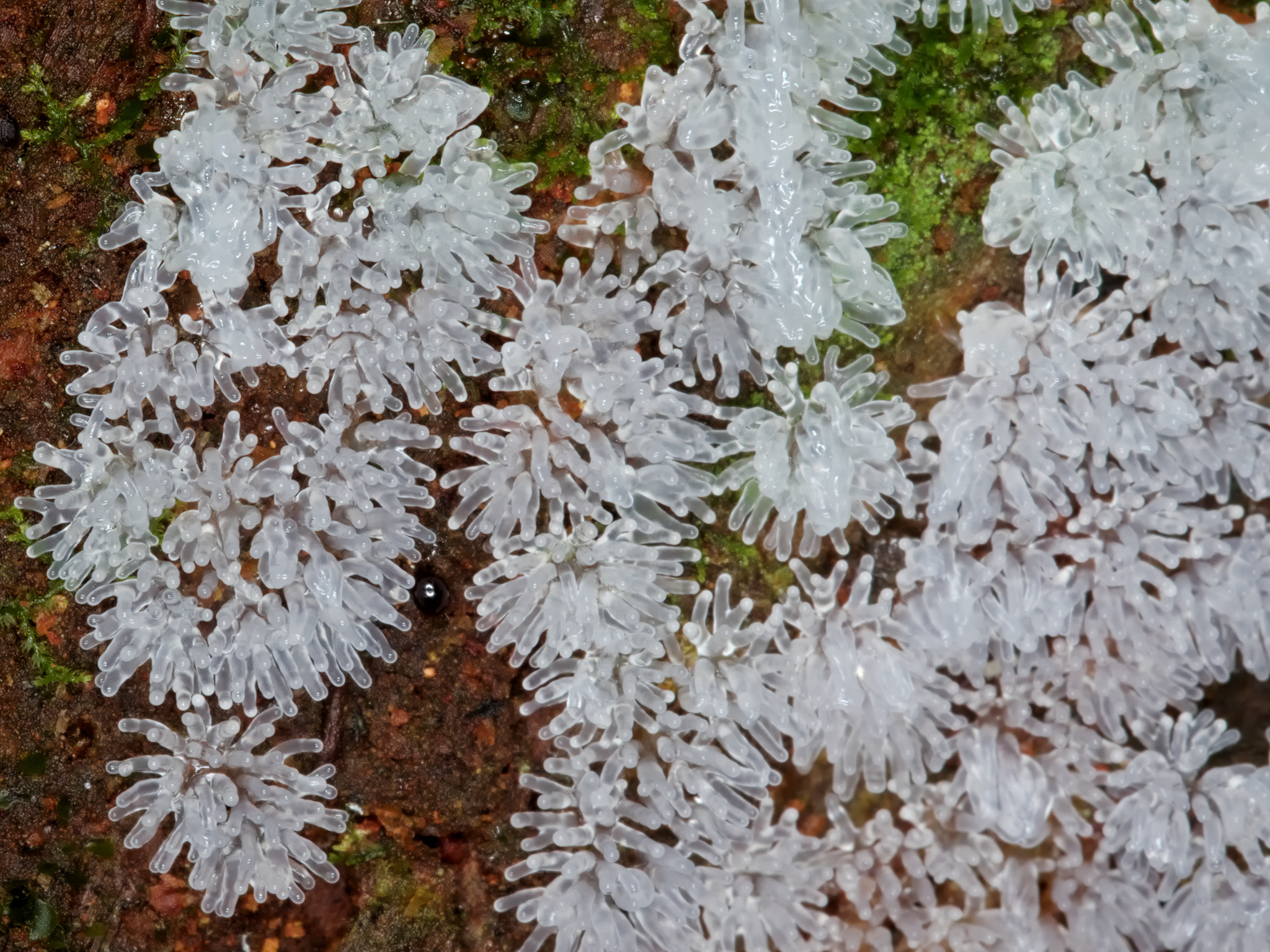
Our first autumn rains have brought out the slime moulds and fungi. Here’s a small collection of photos from a recent visit to Pacific Spirit Park in Vancouver.
Above is a close up of Ceratiomyxa fruticulosa, also known as Common Coral Slime.
Slime moulds are strange to say the least. It’s important to remember they are not fungi, and that the term slime mould is polyphyletic – which is an evolutionary biologist’s way of saying they’re not all closely related. The term, while convenient and useful, is not an accurate reflection of their evolutionary reality.
Ceratiomyxa fruticulosa (Common Coral Slime)
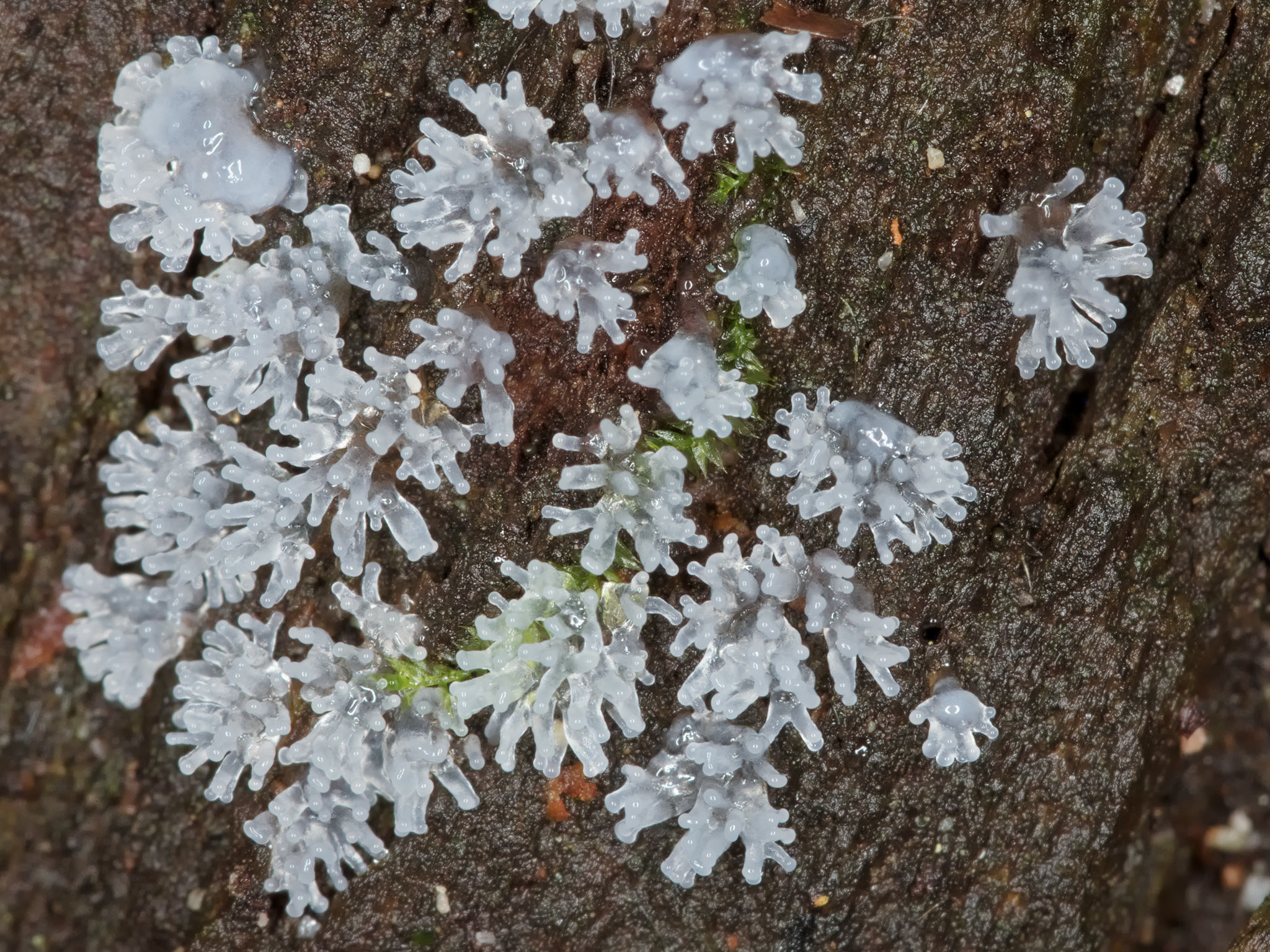
Another patch of Ceratiomyxa fruticulosa.
Ceratiomyxa fruticulosa (Common Coral Slime)
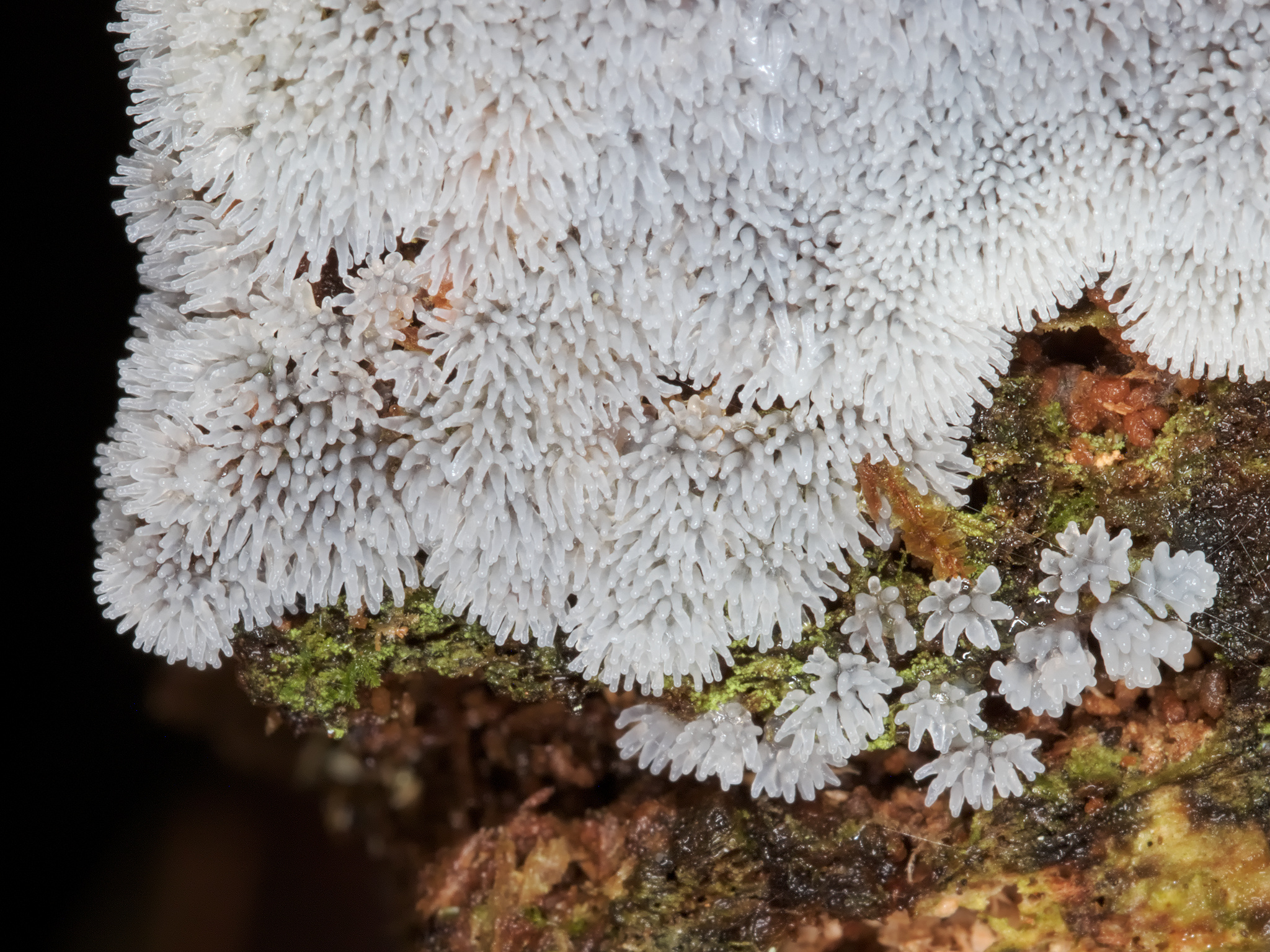
And yet another quite large patch of Ceratiomyxa fruticulosa.
Lycogala epidendrum (Wolf’s Milk)
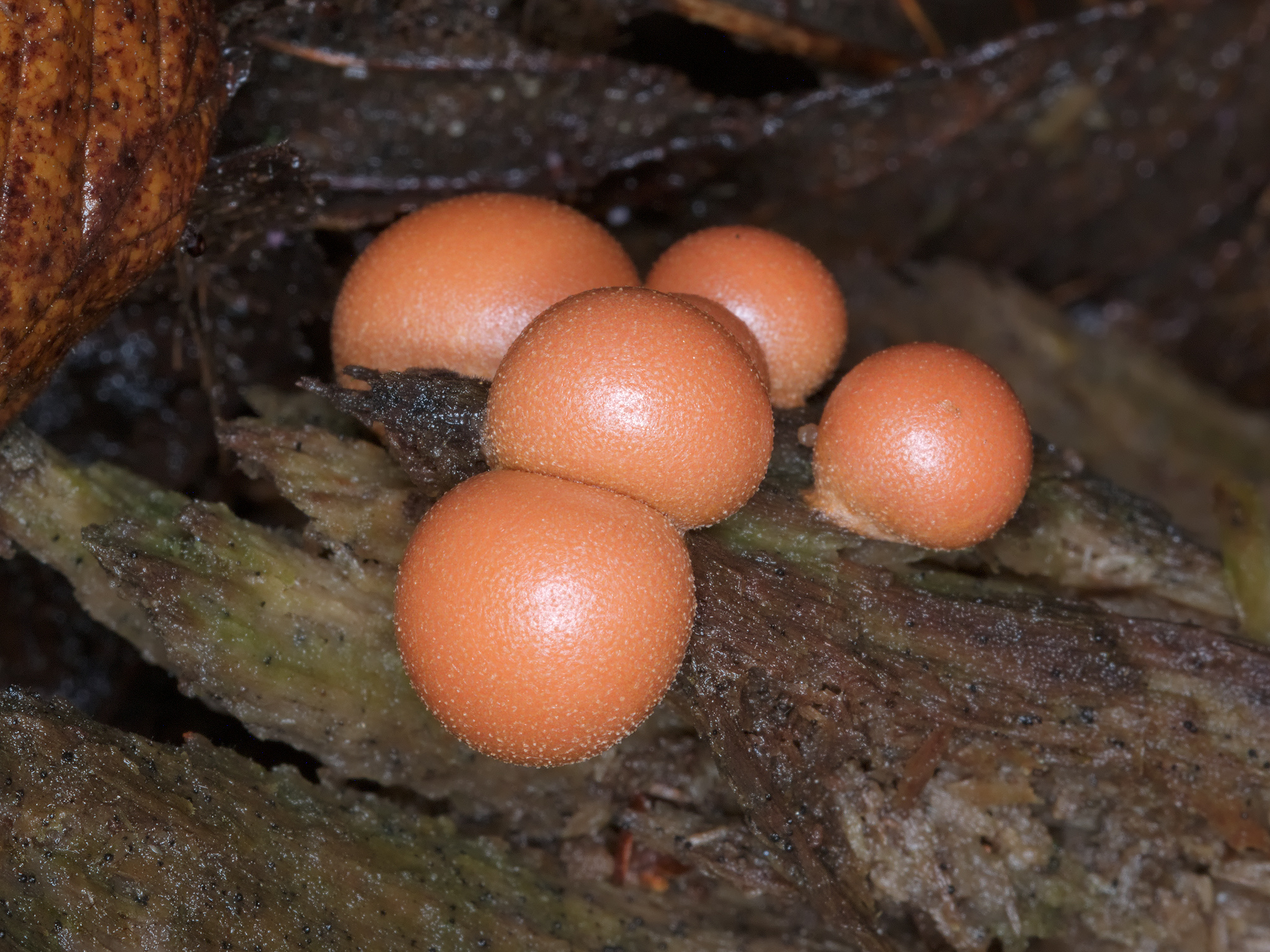
Lycogala epidendrum, commonly known as Wolf’s Milk (why?) is another slime mould that can be found on rotting wood. They can be a challenge to find when they’re grey or brown, but are quite eye-catching when they enter this pink phase.
Unknown Myxomycetes
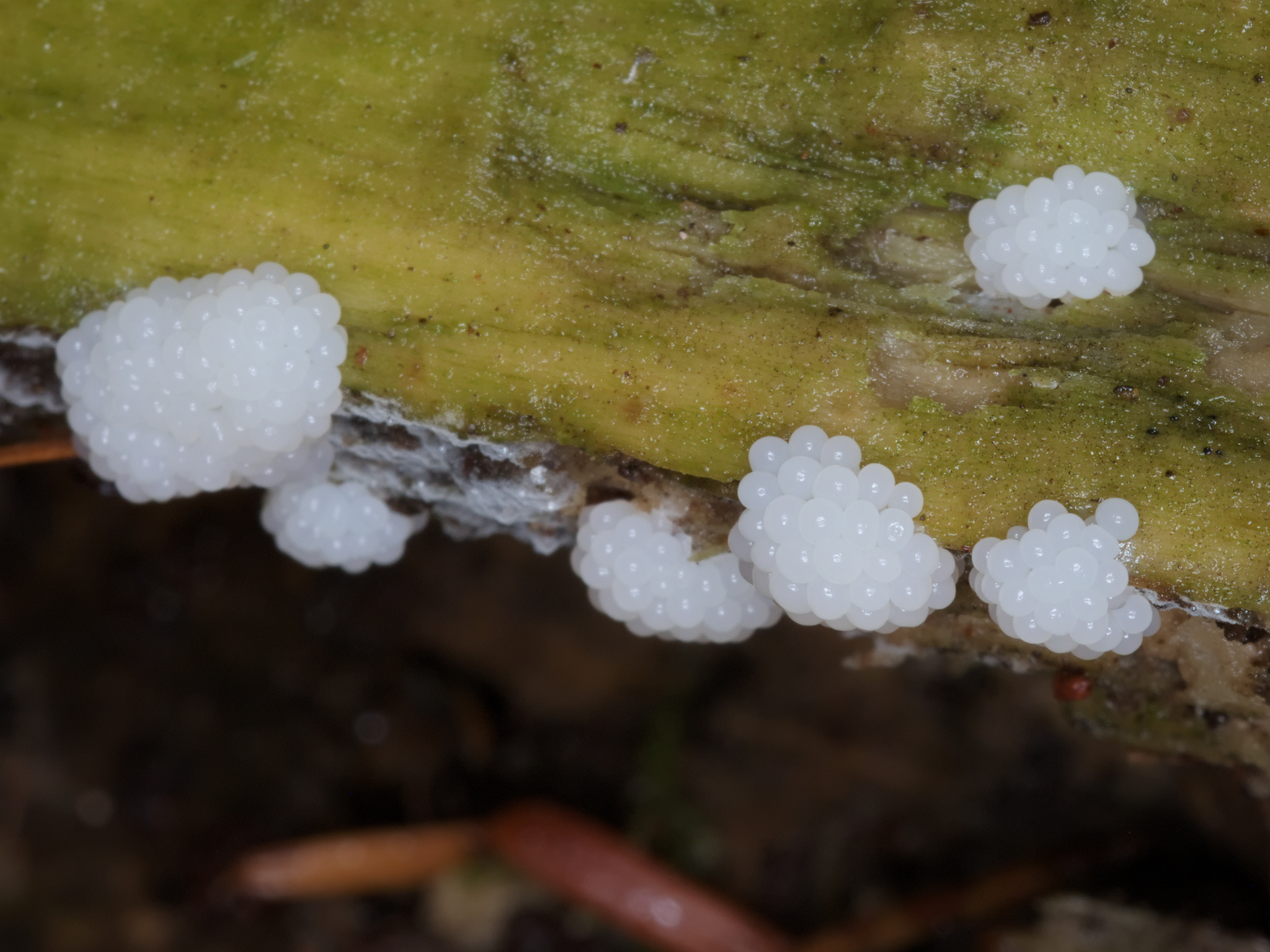
An unknown slime mould at an early stage of development.
Cyathus striatus (Fluted Bird’s Nest Fungus)
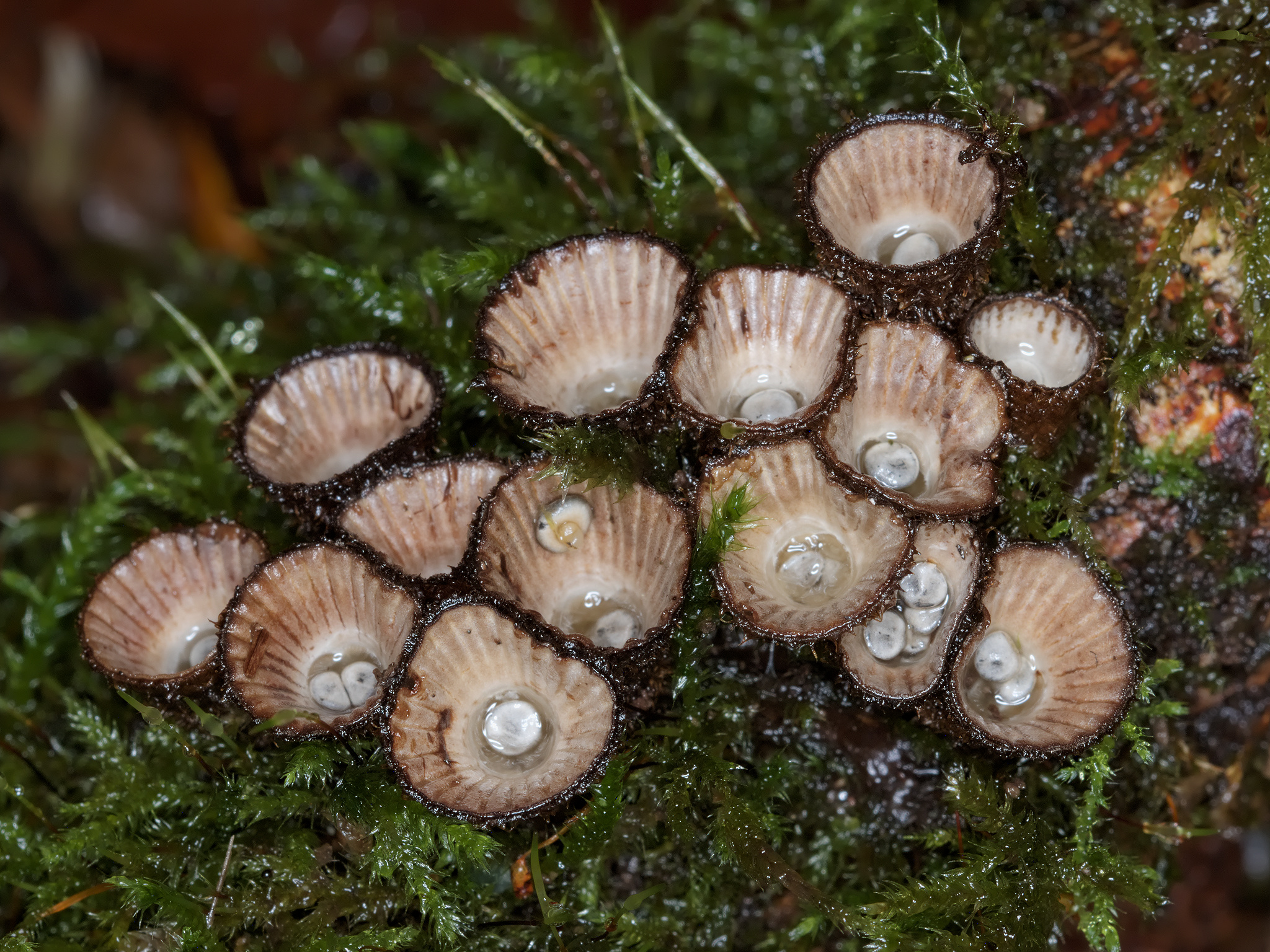
In the lower lying areas of the park the Cyathus striatus fungus was coming up everywhere I looked.
Strobilurus trullisatus (Fir-Cone Mushroom)
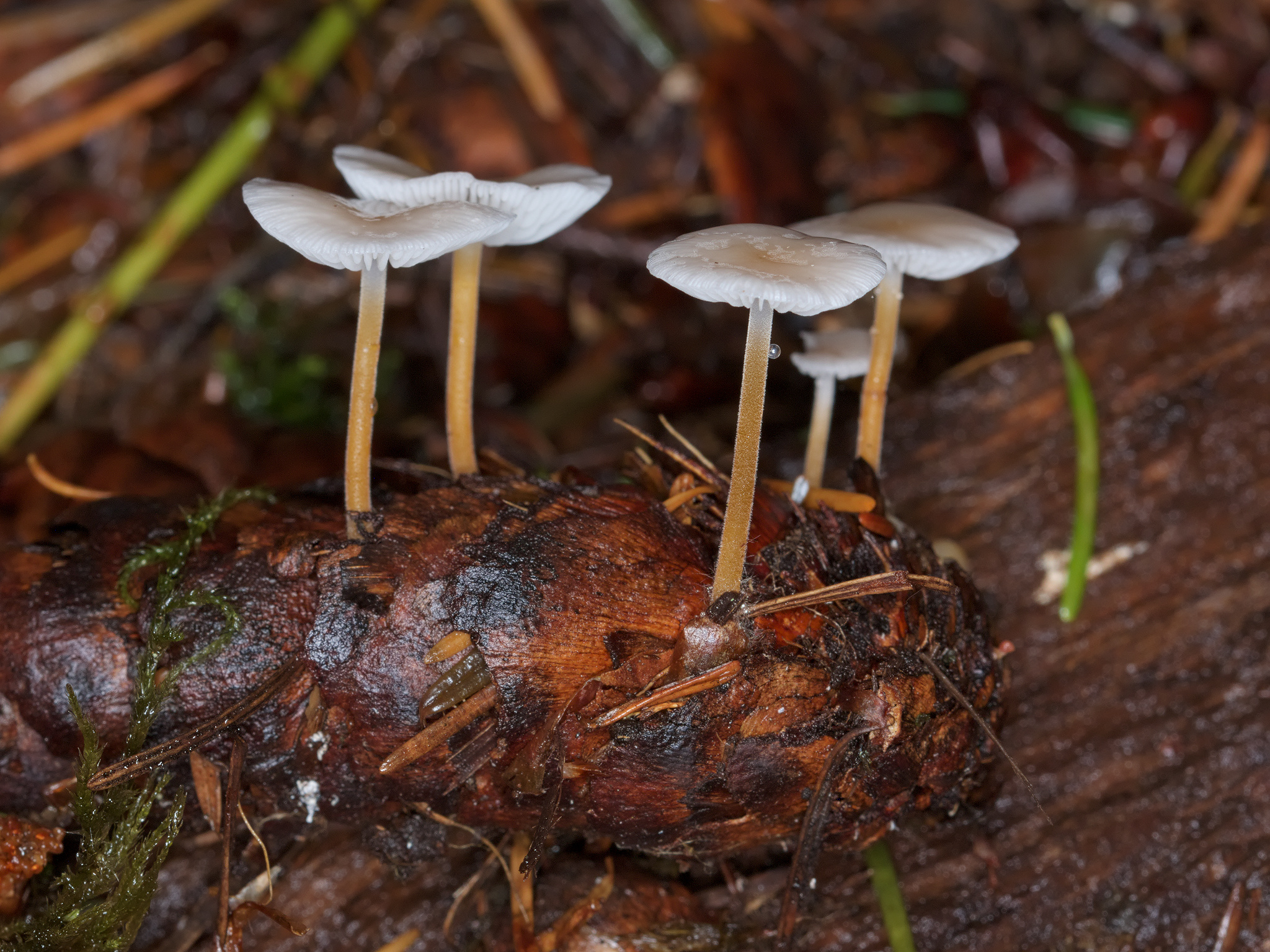
Another prevalent fungus in the park was Strobilurus trullisatus – the Fir-Cone Mushroom. These grow in the fallen cones of Douglas Firs (Pseudotsuga menziesii) which are extremely plentiful throughout the park.
Clavulina coralloides (White Coral Fungus)
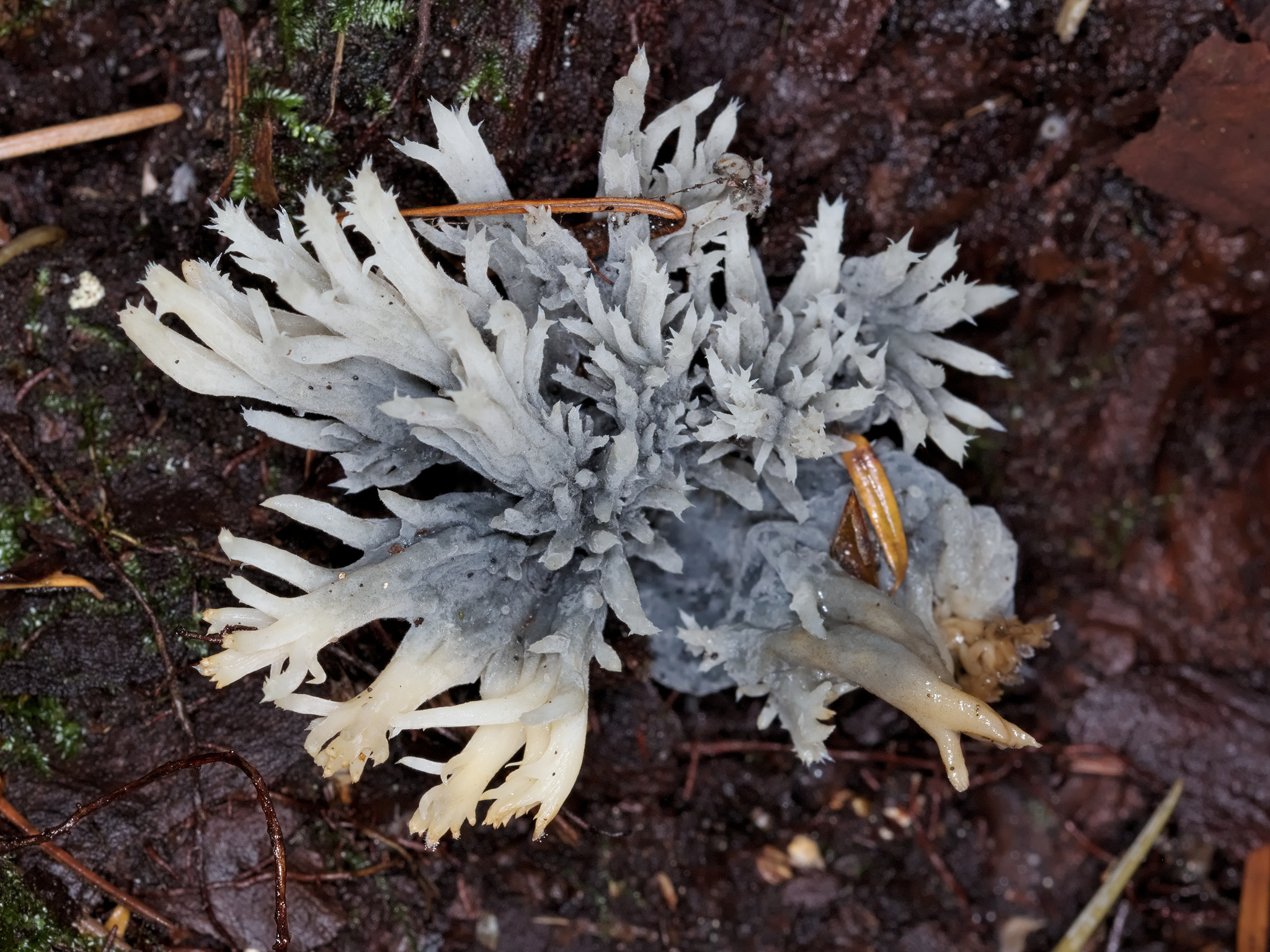
A Clavulina coralloides (White Coral Fungus) that has been infected with the parasitical fungus Helminthosphaeria clavariarum, causing the blue-grey colouration.
Until next time…